Welder (NQF Level 4)
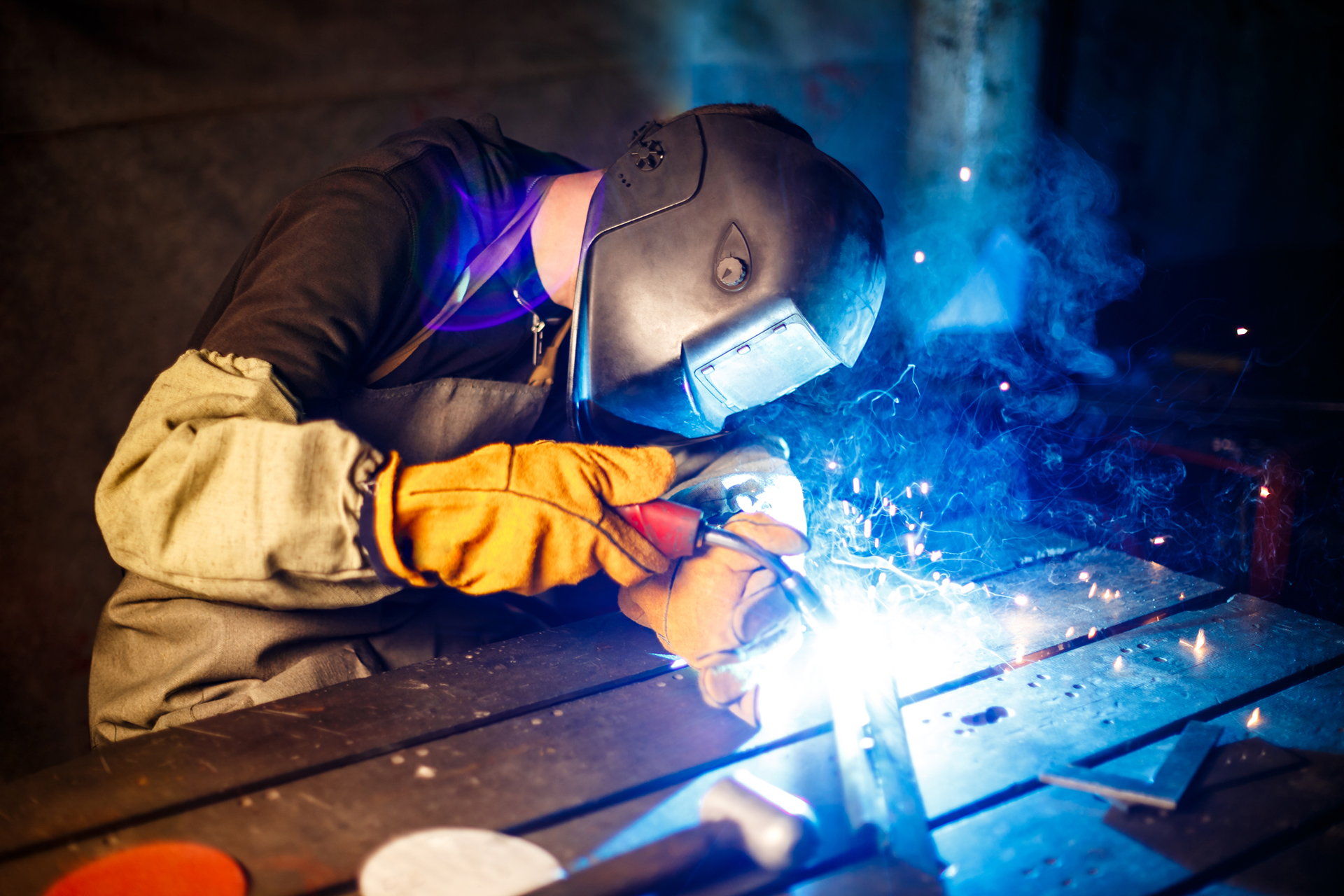
Qualification Title: Welder (Trade)
Curriculum Code: 651202000
NQF Level: 4
Total Credits: 372
Notional Hours: 3 720 Hours (1 Credit = 10 Hours)
Estimated Duration: ±30–36 Months
Development Quality Partner: CHIETA
Assessment Quality Partner: National Artisan Moderation Body (NAMB)
1. Purpose of the Qualification
The Welder NQF Level 4 qualification is a nationally recognised occupational trade programme
designed to develop competent artisans who are able to join metal components in accordance with
Welding Procedure Specifications using electric arc and gas welding processes. The qualification
prepares learners for employment as skilled welders in a variety of industrial environments.
2. Occupational Outcome
A qualified Welder is competent to: • Perform cutting, gouging and gas welding of ferrous materials
• Produce fillet welds using various welding processes
• Produce plate welds using shielded metal arc, gas metal arc and gas tungsten arc welding
processes
• Produce pipe welds using various welding processes
• Apply welding codes, standards, quality control and inspection requirements
• Work safely in compliance with occupational health, safety and environmental legislation
3. Structure of the Qualification
The qualification consists of three integrated components:
Knowledge Modules (81 Credits – 22%)
These modules provide theoretical knowledge in welding safety, welding calculations, materials,
consumables, welding processes, welding parameters, welding codes and standards, weld
inspection, quality assurance and weld imperfections.
Practical Skills Modules (140 Credits – 38%)
These modules focus on hands-on welding skills, including cutting, gouging, fillet welding, plate
welding and pipe welding using MMA, MIG/MAG/FCAW and TIG welding processes under
controlled training conditions.
Work Experience Modules (152 Credits – 40%)
Workplace learning enables learners to apply welding skills in real production environments,
producing fillet, plate and pipe welds while developing teamwork, communication and workshop
discipline under supervision and independently.
4. Skills Progression
The qualification follows an internationally recognised progression route:
• NQF Level 2 – Cutting, gouging and basic welding
• NQF Level 3 – Fillet welding competence
• NQF Level 4 – Plate and pipe welding competence
5. Trade Test Readiness
The curriculum is fully aligned with trade test requirements and international welding standards.
Learners who successfully complete all knowledge, practical and workplace modules are prepared
to undertake the Welder trade test and progress to coded welding specialisations.
6. Industry and International Relevance
The qualification is benchmarked against international welding standards published by the
International Institute of Welding (IIW) and is recognised as comparable with global welder training
programmes. It is relevant to manufacturing, construction, mining, petrochemical, energy and
fabrication industries.
7. Conclusion
The Welder NQF Level 4 qualification produces competent, safety-conscious and industry-ready
welding artisans with strong theoretical knowledge, practical capability and workplace experience,
meeting both national and international industry requirements
Instructor

You May Like

Mechanical Fitter (NQF Level 4)
The Mechanical Fitter qualification is a trade-based occupational programme designed to develop competent artisans who are able to fabricate, maintain, fault-find, repair, install, commission and...
Millwright (NQF Level 4)
The Millwright qualification is a comprehensive occupational trade programme designed to develop highly skilled electromechanical artisans capable of installing, maintaining, diagnosing, repairing and commissioning industrial...
BASIC WELDING TRAINING (SAQA: 58534)
The jQuery team knows all about cross-browser issues, and they have written this knowledge into the jQuery library. jQuery will run exactly the same in...

General Workshop Assistant (SAQA: 63483)
In this course, We'll learn how to create websites by structuring and styling your pages with HTML and CSS.

INDUSTRIAL ELECTRONICS TRAINING (ONE YEAR)
Many of the most powerful, memorable and effective photographs are black and white images. With digital photography though you can no longer take a great...